Combustion & turbulence
Recognised that organised in-cylinder air motion accelerates flame propagation and improves mixing — a core principle of efficient combustion.
Engineering Heritage
The word “Ricardo” in engine circles traces back to Sir Harry Ricardo, a British engineer whose combustion research helped make the high-speed diesel practical. This page summarises that heritage in our own words, for historical and educational context.
Harry Ralph Ricardo was among the foremost engine researchers of the early internal-combustion era. Rather than chasing raw power alone, he was preoccupied with what actually happens inside the cylinder — how air and fuel mix, how the flame spreads, and how to convert more of the fuel's energy into useful work.
In 1915 he set up the engineering practice that still bears his name, giving his experimental work a formal home. His early commissions included refining the engines used in the first tanks, and he went on to contribute to sleeve-valve engine development and a wide range of combustion studies.
His investigations into why engines “knock” — and which fuels resist it — informed the thinking behind the octane-rating system that is still used to classify petrol today.
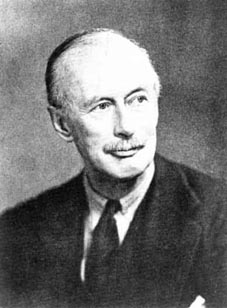
Sir Harry Ricardo
Engine designer & combustion researcher, 1885–1974
 Shown for historical reference. Trademark of its owner; Ricardo Power is independent and unaffiliated.
Harry Ralph Ricardo, later one of the most influential figures in internal-combustion engineering, is born in England. His curiosity about engines began in his school and university years.
Ricardo founds the consultancy that would carry his name, created to fund and formalise his research into engines. Early work included improving the engines fitted to the first tanks.
Ricardo patents a combustion-chamber concept that deliberately induces controlled turbulence by offsetting the valves and spark plug, speeding up flame travel and reducing the tendency to knock in petrol engines.
His experimental work into how fuels resist detonation laid groundwork that fed into the octane-rating system still used to grade petrol today.
Ricardo develops the 'Comet' indirect-injection swirl chamber for high-speed diesel engines. By generating intense, organised air swirl it enabled diesels to run fast and clean enough for road vehicles — first proving itself in city buses.
The Comet principle is licensed to numerous vehicle and engine makers across cars, taxis, trucks, buses, tractors and cranes, helping bring the high-speed diesel into mainstream use.
The combustion insights pioneered in this era — swirl, turbulence, compact chambers and disciplined air-fuel mixing — remain foundational ideas behind the efficient diesel engines built around the world today.
Recognised that organised in-cylinder air motion accelerates flame propagation and improves mixing — a core principle of efficient combustion.
One of the most widely adopted diesel combustion-chamber designs of its era, enabling practical high-speed diesel engines.
Research into detonation and fuel behaviour that contributed to the way petrol quality is rated.
A career-long focus on extracting more useful work from every unit of fuel and reducing waste.
Important: Ricardo Power is an independent website focused on diesel engines manufactured under Ricardo-based engine designs. It is not the official website of Ricardo plc. This heritage section is provided for historical and educational context, based on publicly available information (including material published at ricardo.com). It has been rewritten in original wording and does not reproduce third-party text. It should not be taken to imply any endorsement by, or affiliation with, Ricardo plc.
Defined by its heritage, driven by engineering capability, and proven through delivery.
Engineering know-how grounded in a long heritage across automotive, marine, aerospace and energy work.
Cross-sector engineering, testing and specialist manufacturing offered without loyalty to any single technology.
Faster, lower-risk development that shortens the path from concept to market.
An independent, tailored approach backed by a worldwide footprint and careful protection of customer intellectual property.
A track record of carrying technologies and energy sources across into new industries.
Support from strategy and concept through prototype and production to through-life service.
Corporate context
In 2025 the Ricardo engineering business became part of WSP, one of the world's largest professional-services firms. WSP brings together engineering, advisory and science-led expertise, with a workforce of roughly 75,000 people working across more than 50 countries.
The combination broadens the technical support available across transport, infrastructure, environment, buildings, energy, water, and mining and metals.

The corporate context above refers to Ricardo plc / WSP and is provided for information only, in original wording. Ricardo Power is independent and unaffiliated with Ricardo plc or WSP.